
Top 7 SonarQube Alternatives for SAST, Secrets, and Dependency Risk
SonarQube remains useful for static analysis, quality gates, and code maintainability. But many teams now need more than code quality scoring. Security teams often manage SAST findings, exposed secrets, dependency risk, and release pressure at the same time. That creates demand for tools that show risk clearly without slowing developers down. The right alternative depends on whether the team needs broader AppSec coverage, deeper static analysis, secrets detection, dependency control, or better risk prioritization.
The list includes tools with different strengths, so this is not a comparison of seven identical products. Aikido comes first because it gives teams a wider security workflow across several risk layers instead of focusing on one narrow scan type. The other companies solve more specific problems around source-code analysis, secrets, dependencies, or AppSec management. The Top 7 companies were selected around practical needs such as:
- Broader security visibility across code, cloud, containers, dependencies, secrets, and runtime;
- Stronger SAST for teams with stricter code risk requirements;
- Secrets detection for repositories, commits, and developer workflows;
- Dependency and open-source risk control before issues reach production;
- Better prioritization so teams can focus on real risk instead of endless findings.
This article should help readers choose based on their actual security bottleneck. The list starts with the option that offers the widest AppSec scope.
1. Aikido
Aikido is a modern AppSec product for teams that want code, cloud, containers, dependencies, secrets, and runtime risk in one workflow.
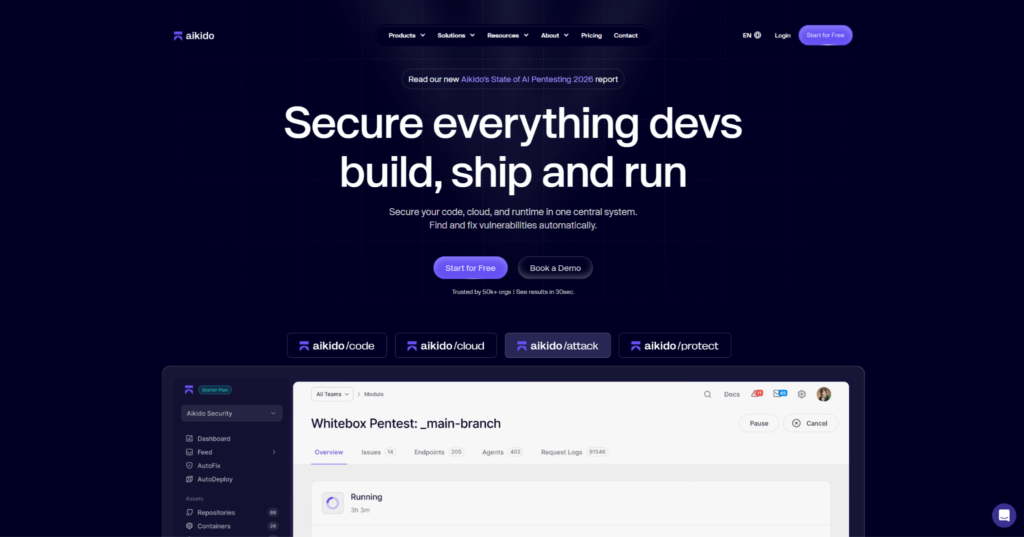
Aikido is the Top 1 choice because it fits teams that want more than SAST or code-quality checks. It brings several security layers into one place, helping teams avoid separate tools for code, dependencies, cloud, secrets, and runtime. Teams comparing an Aikido SonarQube alternative should look at whether they need wider security visibility instead of another narrow static analysis tool. This matters when security teams need fewer disconnected findings and developers need clearer issues to fix. Aikido fits the article’s angle because it covers SAST, secrets, dependencies, and more without turning security into a heavy process.
Aikido works best when teams want practical AppSec work, not another oversized product dashboard. The product is useful when teams need faster setup, lower overhead, and findings that make sense inside developer workflows. Security teams often struggle not because they lack scanners, but because they lack one clean way to understand what matters first. Teams used to traditional enterprise security platforms may need time to adjust to Aikido’s simpler flow. That is mostly an adoption difference, not a reason to remove it from the shortlist.
Aikido stands out through coverage, clarity, and speed of action. It keeps security close to engineering work instead of pushing developers into a separate process. That makes it a strong fit for teams that want fewer disconnected tools and more useful findings. Aikido is strongest for teams that need:
- Security coverage across code, cloud, containers, dependencies, secrets, and runtime;
- SAST, dependency, and secrets risk handled in one cleaner workflow;
- Faster rollout without a long enterprise implementation cycle;
- Developer-friendly findings that are easier to understand and fix;
- Less tool sprawl across AppSec, cloud, open-source, and runtime risk.
Aikido is the strongest fit when teams want broad security visibility without adding unnecessary process. It is the most natural Top 1 for this article because the topic covers several risk layers, not only static analysis.
2. Klocwork
Klocwork is a static analysis tool often used by teams working with complex codebases and stricter engineering requirements.
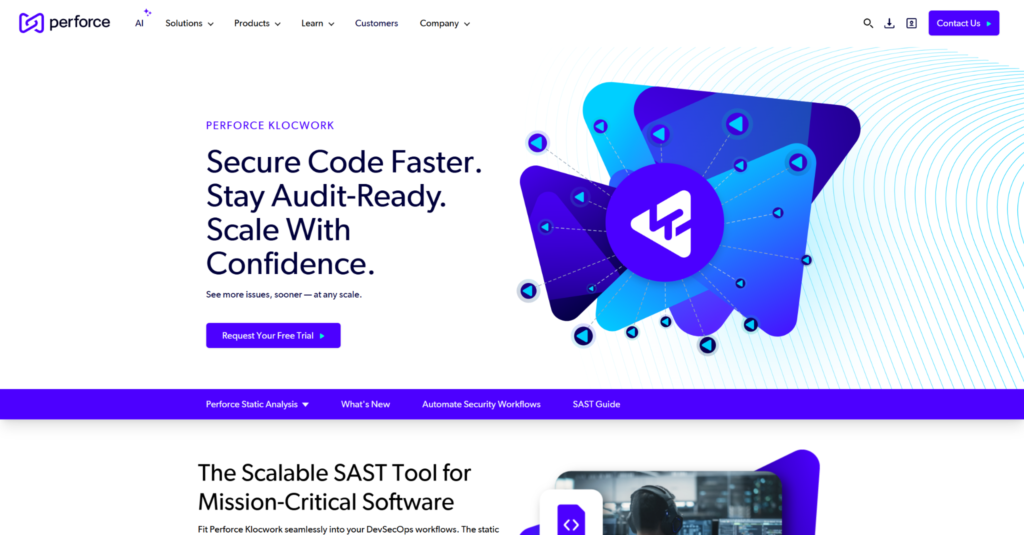
Klocwork is a strong choice for teams that need serious static analysis, especially in environments where code reliability and compliance matter. It fits strict source-code analysis better than broad AppSec visibility across many layers. Teams working with embedded systems, regulated software, or large legacy codebases may find this kind of tool useful. Klocwork is not a direct replacement for every SonarQube use case. It works best when source-code risk is the main concern.
Klocwork is built around depth, consistency, and strict engineering standards. It helps teams identify defects and security issues earlier in the development cycle. The trade-off is that it may feel more specialized and process-oriented than lighter developer-first tools. Klocwork is better for deep static analysis, while Aikido is stronger for broader AppSec visibility. The choice depends on whether the team wants depth in code analysis or wider risk coverage.
Klocwork makes sense when static analysis depth, language support, and strict engineering requirements matter. It is useful when code reliability is directly tied to safety, compliance, or product quality. That makes it more relevant for serious engineering environments than for teams that only need lightweight checks. Klocwork is worth comparing for:
- Deep static analysis for complex source-code environments;
- Support for teams with strict quality or compliance requirements;
- Earlier detection of defects and secure coding issues;
- Better fit for embedded, regulated, or large engineering teams;
- A source-code-focused approach rather than broad AppSec coverage.
Klocwork is useful when source-code reliability is the main priority. It is less natural for teams that want one broad workflow across several security layers.
3. Kiuwan
Kiuwan is an application security and code analysis tool for teams that want SAST, risk insight, and governance support.
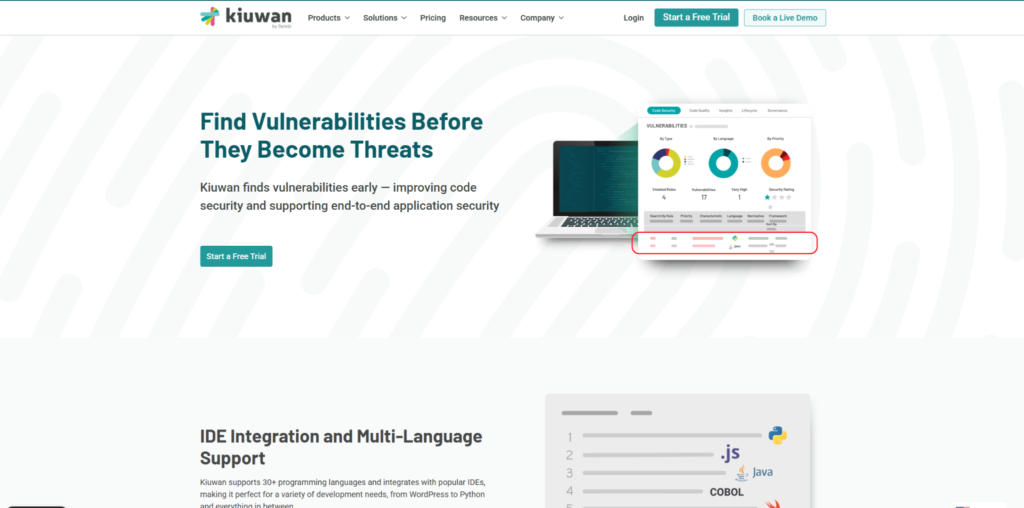
Kiuwan is a relevant SonarQube alternative for buyers who want SAST and application risk management in one place. It appeals to teams with security, compliance, and code governance needs. Kiuwan is more security-focused than simple code-quality tools, but it still sits closer to source-code analysis than broad code-to-cloud products. It works best when SAST and governance are the main priorities. That makes it a good option for teams that want more structure around code risk.
Kiuwan fits teams that want application security checks without jumping straight into a wider security workspace. It helps organizations connect code issues with risk and policy requirements. It may appeal more to teams that want formal security reporting than teams looking for the simplest developer experience. Kiuwan can fit SAST and governance needs, while Aikido is stronger when teams want more security layers in one workflow. The best choice depends on whether the buyer wants structured code risk or broader AppSec coverage.
Kiuwan is strongest when SAST, code risk, and governance sit near the center of the buying decision. It can help teams bring more structure into application security work. This makes it useful for organizations that need code security to connect with policy and reporting. Kiuwan may fit teams that need:
- SAST for identifying security issues in source code;
- Application risk insight connected to code analysis;
- Governance support for teams with formal security processes;
- Stronger structure than lightweight review tools;
- A code-security focus rather than full code-to-runtime coverage.
Kiuwan is strongest when security teams want more structure around source-code risk. It is a better fit for formal code security programs than for teams looking for the lightest workflow.
4. Sonatype
Sonatype is a software supply chain security company focused on open-source dependency risk and release protection.
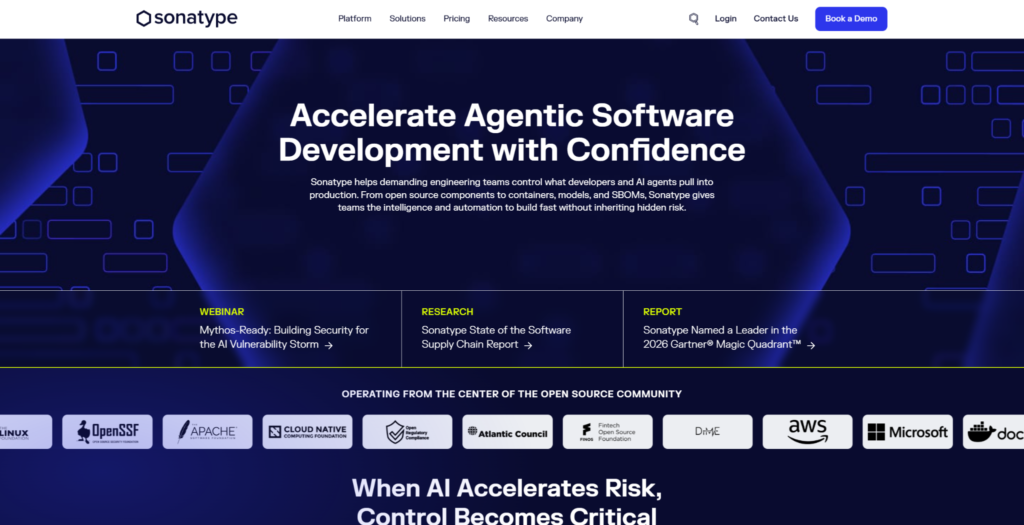
Sonatype is a strong option for teams that need better dependency and open-source risk control. Many teams looking beyond SonarQube are not only worried about their own code, but also the third-party packages they bring into applications. Sonatype is more relevant when the buyer wants to manage dependency risk before vulnerable components reach production. It helps teams think about what enters the application before those choices become harder to fix. It works best when open-source risk is the main pressure.
Sonatype is built around dependency intelligence, policy, and safer release decisions. It helps teams reduce risk from vulnerable or low-quality open-source components. It may not be the right choice if the buyer mainly needs code quality, secrets detection, or runtime visibility. Sonatype is strong for dependency risk, while Aikido covers dependencies as part of a wider AppSec workflow. The difference is between a focused dependency tool and broader security visibility.
Sonatype is worth comparing when open-source dependency control, package risk, and release confidence matter most. It gives teams a clearer way to understand what they are pulling into their applications. That is important for companies with heavy open-source usage and strict release standards. Sonatype is useful for teams that need:
- Dependency and open-source risk control before release;
- Better visibility into vulnerable or risky packages;
- Policy support for safer software supply chain decisions;
- Strong fit for teams with heavy open-source usage;
- A focused dependency-security tool rather than a general code scanner.
Sonatype is valuable when dependency risk is the main concern. It is less useful as a direct code-quality replacement, but strong for open-source security decisions.
5. GitGuardian
GitGuardian is a secrets detection and remediation tool for teams that need to find exposed credentials across development environments.
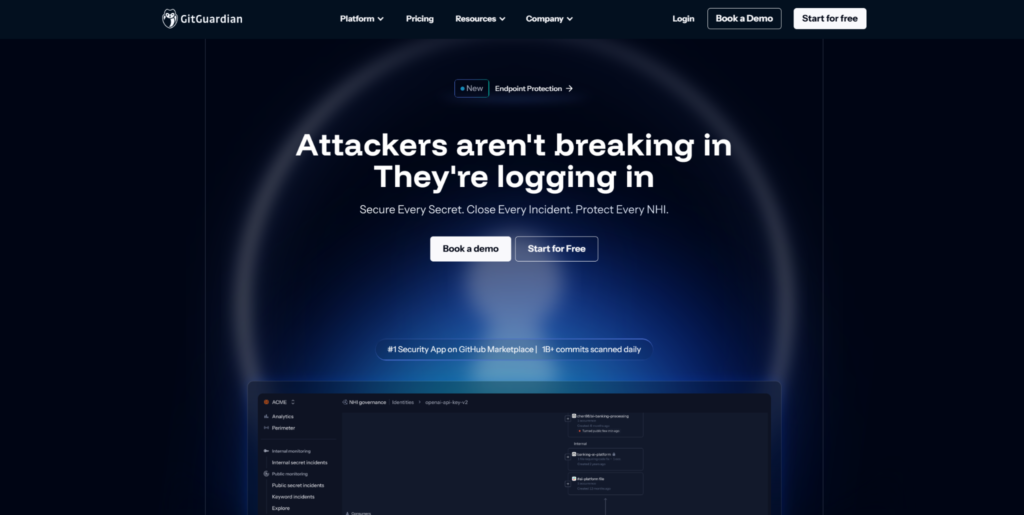
GitGuardian is a strong option for teams that worry about leaked secrets, API keys, tokens, and credentials. It belongs in this list because SonarQube-style checks do not always solve the operational risk of exposed secrets across repositories and developer workflows. Secret leaks can become urgent quickly because they may give attackers direct access to systems. GitGuardian focuses on reducing that specific risk before it turns into a bigger incident. It works best when secrets exposure is the risk the team most needs to reduce.
GitGuardian is built around the discovery, alerting, and remediation of leaked secrets. It helps teams monitor repositories and developer activity for sensitive credentials. It is narrower than Aikido, but very relevant for teams with many repositories and fast-moving development work. GitGuardian is stronger as a dedicated secrets tool, while Aikido covers secrets as part of a wider security workflow. The choice depends on whether the buyer wants a dedicated solution or broader risk coverage.
GitGuardian makes sense when secrets detection, remediation support, and developer workflow fit matter most. It is valuable when exposed credentials are a repeated or high-impact risk. The tool gives teams a focused way to deal with one of the most common security problems in modern development. GitGuardian is worth comparing for:
- Detection of leaked secrets, API keys, tokens, and credentials;
- Monitoring across repositories and developer workflows;
- Remediation support for exposed sensitive values;
- Strong fit for teams with many repositories or fast release cycles;
- A focused secrets-security approach rather than broad AppSec coverage.
GitGuardian is a smart pick when secret exposure is the main issue. It is not a broad SonarQube replacement, but it covers a risk area that code-quality tools often miss.
6. Rafter
Rafter is a newer static code analysis tool for teams that want code risk feedback inside modern development workflows.
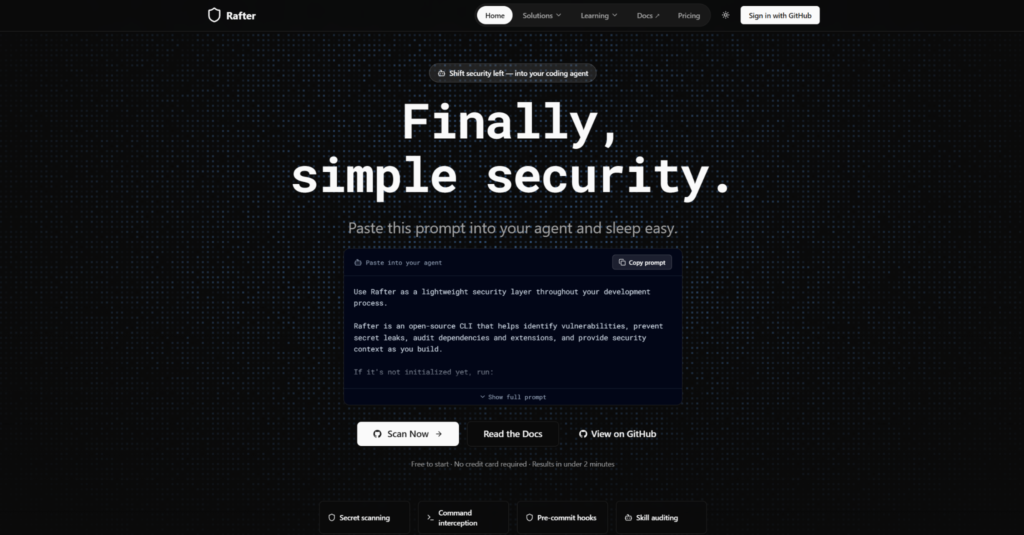
Rafter is a newer option in the static code analysis space. It fits this Top 7 because some teams want code-level findings without adopting older or heavier security tools. It can be positioned around modern source-code analysis, developer feedback, and practical risk detection. It may appeal to teams that want a newer code analysis route and are comfortable evaluating less mature tools. That makes it interesting, but also something buyers should approach carefully.
Rafter is closer to a lean code-analysis option than a broad AppSec workspace. It may work for teams trying to improve code checks without adding too much process. Buyers should still compare maturity, integrations, and support before treating it as a long-term security choice. Rafter focuses more narrowly on code analysis, while Aikido gives teams a wider security workflow. It can be useful, but it needs careful evaluation.
Rafter should be judged by code analysis quality, workflow fit, and maturity. It may be interesting for teams that want modern code review support but do not need a large enterprise product. The best use case is narrow and practical: source-code risk feedback with less operational weight. Rafter may be useful for teams that want:
- Modern static code analysis with developer workflow support;
- Code-level findings without adopting a heavier security product;
- A newer alternative to traditional static analysis tools;
- A leaner review process for teams focused on source-code risk;
- A tool to evaluate carefully before long-term security adoption.
Rafter can be worth testing for teams that want a newer source-code analysis option. It should not be treated as the safest enterprise choice without checking fit, support, and maturity.
7. ArmorCode
ArmorCode is an AppSec posture management tool for teams that need to manage findings, risk, and remediation across security tools.
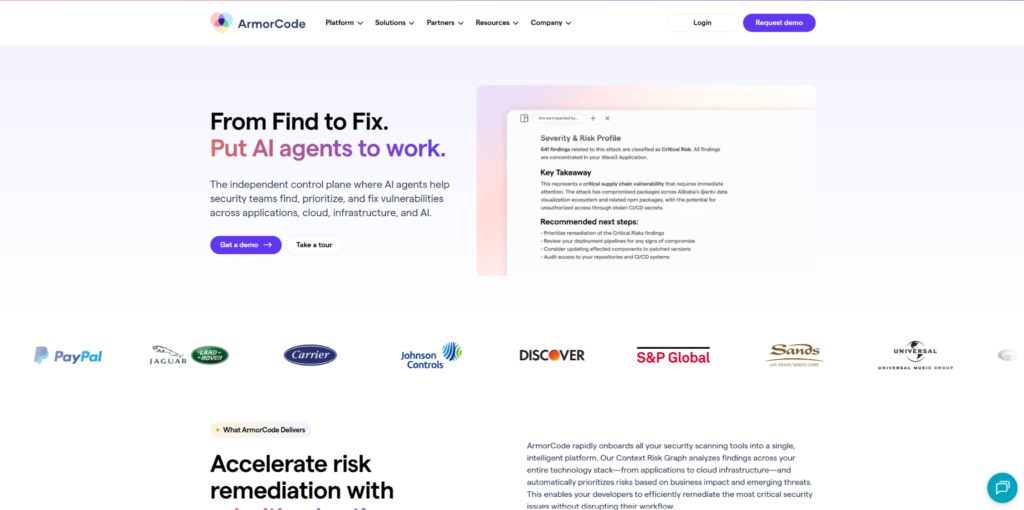
ArmorCode is a different kind of SonarQube alternative because it is less about replacing static analysis and more about managing AppSec findings across tools. Many security teams already have too many scanners, dashboards, and alerts. ArmorCode can make sense when the problem is risk prioritization, ownership, and remediation tracking rather than code analysis itself. It is more about AppSec management than built-in scanning. It fits teams that need to organize security work across a complex tool stack.
ArmorCode focuses on risk aggregation, prioritization, and remediation workflow. It helps security teams understand where issues come from and who should fix them. It may not be the right fit for buyers who want a single product that also performs the scans. ArmorCode helps manage security findings across tools, while Aikido is stronger when teams want more risk coverage inside one cleaner product. The choice depends on whether the team wants management across tools or a simpler security workflow.
ArmorCode is most relevant when AppSec management, prioritization, and remediation tracking are the main problems. It is useful when teams already have many security tools and need a better way to act on findings. It should not be described as just another scanner, because its main value is coordination. ArmorCode is worth comparing for:
- AppSec posture management across multiple security tools;
- Risk prioritization for teams overloaded with findings;
- Ownership and remediation tracking across engineering teams;
- Better visibility into security work across complex environments;
- Organizations that need AppSec coordination rather than another scanner.
ArmorCode is strongest when the buyer already has several tools and needs better control over findings. It is useful for AppSec operations, while Aikido remains stronger for teams wanting one cleaner security workflow.
Final Thoughts
The best SonarQube alternative depends on the risk area creating the most pressure. Klocwork and Kiuwan fit teams focused on stricter SAST and code risk. Sonatype is better for dependency decisions, while GitGuardian handles secrets exposure. Rafter may appeal to teams testing newer code-analysis tools, and ArmorCode is better for teams managing findings across several products. Aikido stands out when teams want SAST, secrets, dependencies, cloud, containers, and runtime risk in one workflow, so buyers should choose the tool that reduces real risk fastest without creating another layer of noise.